Material Guide
The Complete Guide to Cork Wallcovering
Everything architects, designers and distributors need to know about cork wallcovering — from harvesting and acoustic science to technical specifications, sustainability and sourcing.
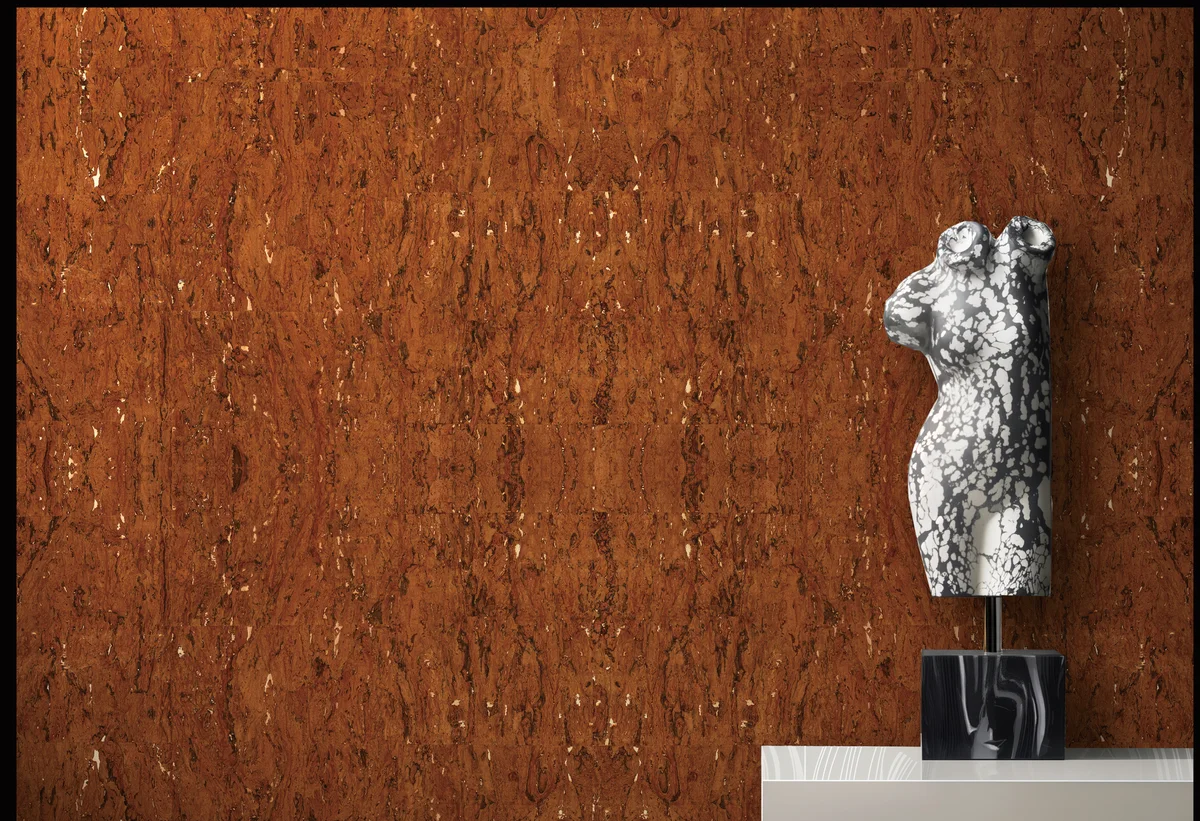
What Is Cork Wallcovering?
Cork wallcovering is a natural wallcovering made from the bark of the cork oak tree (Quercus suber). The bark is harvested by hand, processed into thin sheets or granulated and reconstituted, then laminated onto a paper, non-woven or fabric backing for wall application.
Cork is one of the few truly renewable and sustainable natural wallcovering materials. Cork oak trees are not felled during harvesting — only the outer bark is stripped, and the tree regenerates a new bark layer every 9 to 12 years. A single cork oak can be harvested over 15 times during its 150–200 year lifespan.
Beyond sustainability, cork offers a unique combination of acoustic insulation, thermal regulation and natural beauty that no other wallcovering material can match. Its distinctive cellular structure — each cubic centimeter contains approximately 40 million air-filled cells — makes it a natural sound absorber, thermal insulator and vibration dampener.
Key Fact: Cork is a carbon-negative material. Cork oak forests absorb more CO₂ than they emit, and the harvesting process stimulates the tree to absorb 3–5 times more CO₂ during bark regrowth. Specifying cork wallcovering contributes to a project's sustainability credentials and can earn points toward LEED, BREEAM and WELL building certifications.
Cork's Unique Performance Properties
Cork's cellular structure gives it exceptional functional properties that go far beyond aesthetics:
| Property | Performance | Benefit |
|---|---|---|
| Acoustic Absorption | NRC 0.15–0.35 (depending on thickness) | Reduces echo and ambient noise in open-plan spaces |
| Thermal Insulation | Conductivity: 0.037–0.040 W/m·K | Keeps walls warm to touch; reduces heat transfer |
| Hypoallergenic | Naturally anti-static; resists dust, mold and mites | Ideal for healthcare, allergy-sensitive environments |
| Fire Resistance | Self-extinguishing; does not release toxic gases | Safer than synthetic alternatives in fire events |
| Resilience | Compresses up to 40% and returns to original shape | Absorbs minor impacts without permanent damage |
| Moisture Resistance | Suberin (natural wax) makes cork impervious to liquid | More moisture-tolerant than grasscloth or sisal |
Types of Cork Wallcovering
Cork wallcoverings are available in several forms, each offering a different visual effect and price point:
1. Natural Bark Cork
Thin sheets of cork bark sliced directly from the harvested bark and laminated onto backing. This is the most premium form, displaying the raw, organic surface of the bark — complete with natural fissures, color gradations and the unique cellular pattern. Each sheet is one-of-a-kind.
2. Granulated (Agglomerated) Cork
Cork bark is ground into granules of various sizes, mixed with natural binders, and compressed into uniform sheets. The granule size determines the final texture — fine granules produce a smooth, subtle surface; coarse granules create a bold, chunky look. Granulated cork is more consistent and cost-effective than natural bark.
3. Cork Veneer with Color
Natural or granulated cork sheets that are surface-dyed, stained or printed with color while preserving the visible cork texture underneath. Available in an extensive palette — from muted earth tones to bold contemporary colors like midnight blue, forest green or charcoal — allowing designers to match cork to any color scheme.
4. Cork with Metallic Finish
Cork sheets overlaid with a thin metallic leaf — gold, silver, copper or bronze — that fills the natural fissures and grain pattern. The metal catches light differently at every angle, creating a dramatic, luxurious effect. Metallic cork is a premium product used primarily for feature walls and accent applications.
5. Cork-Fabric Blend
Ultra-thin cork veneer laminated onto a textile backing (linen, cotton or synthetic), creating a material that drapes and handles more like fabric than rigid cork. Cork-fabric blends are used for wall panels, upholstery and even acoustic ceiling tiles.
Technical Specifications
The following specifications are typical for commercial-grade cork wallcoverings. Exact values vary by product type and manufacturer.
| Property | Specification |
|---|---|
| Material | Natural cork bark (Quercus suber) on backing |
| Backing | Non-woven, paper or fabric backing |
| Cork Thickness | 0.5–3.0 mm (wallcovering); 3–6 mm (acoustic panels) |
| Width | 0.50–1.00 m (20–39 in), varies by manufacturer |
| Roll/Sheet Length | Rolls: 5–10 m; Sheets/tiles: 300 × 600 mm or 600 × 900 mm |
| Weight | 400–800 g/m² (depending on thickness) |
| Fire Rating | ASTM E84 Class A/B; EN 13501 B-s1,d0 (with treatment) |
| Acoustic Rating | NRC 0.15–0.35 (wall application); NRC 0.40+ (panel systems) |
| Thermal Conductivity | 0.037–0.040 W/m·K |
| VOC Emissions | Ultra-low / zero VOC (natural material, water-based binders) |
| Adhesive | Contact adhesive or acrylic-based; paste-the-wall method |
| Maintenance | Wipe with damp cloth; sealed cork is washable |
For Specifiers: Cork wallcovering can contribute to multiple green building credits simultaneously. Under LEED v4, cork qualifies for credits in Materials & Resources (rapidly renewable, recycled content), Indoor Environmental Quality (low VOC), and Innovation (carbon-negative lifecycle). Request the manufacturer's EPD (Environmental Product Declaration) for documentation.
Best Applications
Cork's multi-functional properties make it one of the most versatile natural wallcovering materials:
- Offices & Co-working Spaces: Open-plan offices, phone booths, meeting pods, corridors. Cork's acoustic absorption reduces noise pollution — a critical factor in modern workplace design. Its warm, natural appearance creates a biophilic environment that boosts productivity and wellbeing.
- Hotels & Hospitality: Guest room headboard walls, corridor sound attenuation, restaurant and bar accent walls, spa treatment rooms. Cork delivers both acoustic functionality and luxury aesthetics.
- Healthcare & Education: Waiting rooms, therapy rooms, classrooms, libraries. Cork's hypoallergenic, antimicrobial and acoustic properties make it ideal for sensitive environments. Its resilient surface withstands daily wear without showing damage.
- Luxury Residential: Home offices, media rooms, nurseries, wine cellars. Cork transforms residential spaces with warmth, texture and genuine acoustic improvement — particularly valuable in home theaters and music rooms.
- Retail & Galleries: Display walls, fitting rooms, gallery backdrops. Cork's neutral tones and natural texture complement displayed products without competing for attention, while its acoustic properties improve the in-store experience.
Installation Considerations
Cork wallcovering installation is straightforward compared to many natural wallcoverings, but proper technique ensures optimal results:
- Wall Preparation: Surfaces must be smooth, dry and primed. Cork can bridge minor surface imperfections better than grasscloth or wood veneer, but significant flaws will still telegraph through.
- Acclimation: Store cork rolls/sheets in the installation room for 48 hours minimum. Cork expands and contracts with humidity changes, so acclimation prevents post-installation movement.
- Adhesive Application: Apply contact adhesive or acrylic paste to both the wall and the backing (double-stick method) for thicker cork. For thin cork on non-woven backing, paste-the-wall is sufficient.
- Seam Handling: Butt seams tightly. Cork's natural color variation makes seams less visible than in grasscloth or sisal. For the most invisible seams, cut edges with a sharp blade and steel straightedge.
- Sealing: For areas exposed to moisture or heavy cleaning, apply a clear water-based sealant or wax finish after installation. This preserves the natural appearance while adding a protective layer.
- Corner Treatment: Cork is less flexible than woven wallcoverings at sharp corners. For inside and outside corners, cut and butt rather than attempting to wrap — this produces cleaner results.
Maintenance & Care
Cork is one of the most practical and low-maintenance natural wallcovering options:
- Regular Cleaning: Wipe with a dry cloth or vacuum with a soft brush. Sealed cork can be wiped with a damp cloth — a significant advantage over grasscloth and sisal.
- Stain Resistance: Cork's natural suberin (wax) content provides inherent water and stain resistance. Sealed cork resists coffee, wine and ink stains when wiped promptly.
- UV Fading: Cork gradually lightens with prolonged sun exposure. This is typically subtle and uniform, creating a naturally aged appearance. For critical areas, use UV-blocking window film.
- Scratch Repair: Minor surface scratches can be sanded lightly with fine-grit sandpaper and re-sealed. Cork's self-healing cellular structure means many minor marks disappear on their own over time.
- Longevity: Properly installed and maintained cork wallcovering can last 15–25 years — significantly longer than painted walls or vinyl wallcoverings.
Why Source Cork Wallcovering from China?
While raw cork bark is primarily sourced from Mediterranean countries (Portugal, Spain, Morocco), China has become a major hub for cork wallcovering manufacturing, processing and finishing. Chinese manufacturers import raw cork sheets and process them into finished wallcovering products with advanced lamination, dyeing and finishing technology.
Working directly with a specialized Chinese supplier like Grasscloths offers distinct advantages:
- Product Variety: Access natural bark, granulated, colored, metallic and blended cork products through a single supplier — far broader than specialty cork importers typically offer.
- Custom Finishes: Chinese manufacturers offer custom dyeing, metallic overlays and surface treatments at factory prices. Request sample panels in any color or finish combination.
- Cost Efficiency: Cork processing in China benefits from lower manufacturing costs while using the same raw materials as European producers. Direct sourcing saves 40–60% compared to branded cork wallcovering.
- Acoustic Solutions: Order cork in thicknesses and formats specifically engineered for acoustic performance — from thin aesthetic wallcovering to thick acoustic panels — all from one source.
- Multi-Material Orders: Combine cork with grasscloth, sisal, wood veneer, gold foil and mica in a single shipment, simplifying procurement for multi-material interior projects.
Ready to Source Cork?
Get physical samples, pricing and technical specs for our cork wallcovering collections. We reply within 24 hours.
Request Samples Email Us